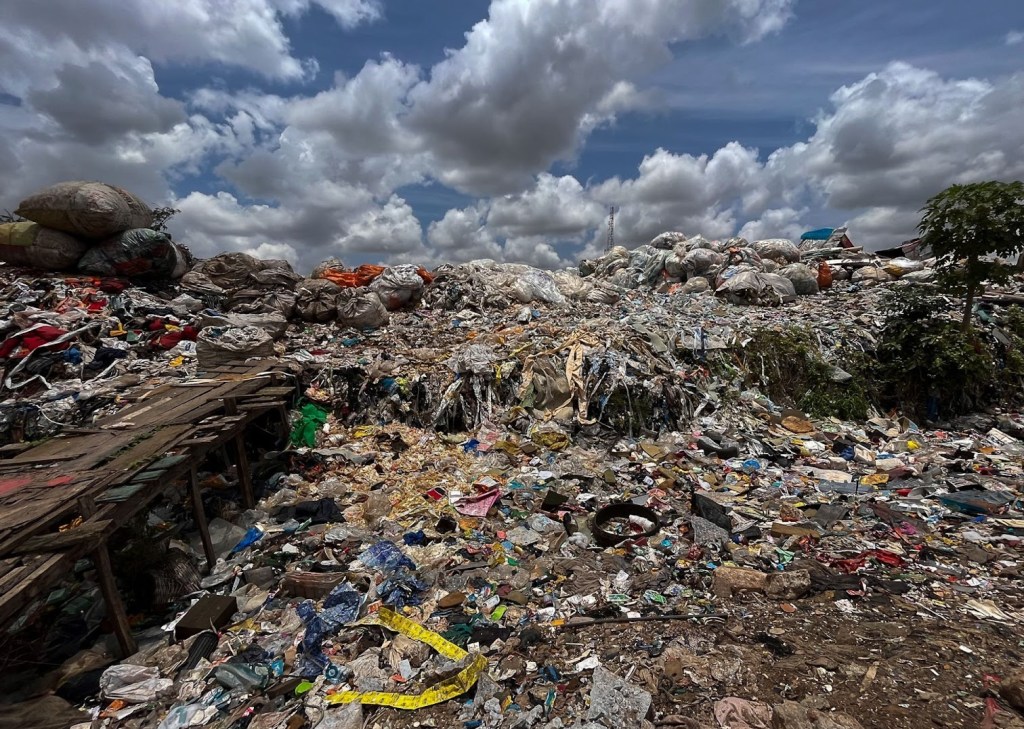
A routine so regular, yet one that few ever give serious attention to. It is much like the breath we take: you know you must breathe to stay alive, but because it happens with little to no effort on your part, you often take it for granted and, unless endangered, rarely give it serious thought. Analogous to this is the trash we generate every single day. The logic goes like this: the average person convinces himself that he is only responsible for the trash he generates as long as it remains within his yard, but once it is tossed out or handed over to informal trash removers (scavengers), he is suddenly absolved of all responsibility. The question remains: what do people think the scavengers do with the trash—make it disappear, or responsibly process it?
Everyone knows where the trash ends. It ends up on undeveloped plots of land within cities; it ends up on riverbanks and inside rivers; it even ends up on the streets. Trash becomes like an illegitimate child that no one wants to claim. Yet this attitude has taken a heavy toll on Nigeria for a long time. Is the time not yet here for the state and the public at large to begin doing their due diligence?
Take the Federal Capital Territory (FCT) as an example. Just by being the capital city, it should reflect the best the country can offer in terms of modernization and development. Whatever is not found in the city in that regard should be assumed missing in the entire country; if performance descriptors are graded between “excellent” and “terrible” on a performance meter, then whatever is graded as poor in the FCT should automatically be assumed to be terrible in the rest of the country.
We zoomed in on the satellite town of Kubwa in the FCT to assess the situation as it relates to trash management. Kubwa was officially established around 1990, like all planned satellite towns around Abuja, with the specific aim of creating a settlement area for the original inhabitants of Abuja to make way for the development of the city center, and also to provide affordable housing for government employees and middle-income earners. Even though the town was initially meticulously planned and built, over the subsequent years, it has turned into a mini Lagos: overcrowded and almost fully built up, disorderly, except for the newly developing FO1 site meant for upper-middle-class families.
When you visit an area called Kubwa village, you may easily think you are in Apapa, Lagos, because of the disorganization, uncleanliness, and lack of any reasonable town planning. This is the FCT, where the ever-active Abuja Environmental Protection Board (AEPB) is often sighted harassing street vendors and other petty traders trying to make a living by selling groceries, roasted corn, food, and similar items.
In essence, the functions of the Abuja Environmental Protection Board (AEPB) include “the preservation of all ecological processes to their pre-impact status for the conservation of biodiversity. It ensures the protection and improvement of air, water, land, forests, and wildlife within the ecology of the FCT. Municipal liquid and solid waste collection and disposal, as well as sanitation management services—including the connection of plots to the central sewer line—are among the services it is supposed to render to FCT residents. Additionally, it is tasked with providing pollution control, environmental health fumigation, and vector control services.”
Specifically, the AEPB, according to the Abuja Metropolitan Management Council website, under the Environment section (item 8), is tasked with ensuring that “no dumping of waste, erection of structures, farming, or encroachment of any sort in river valleys” shall be permitted. However, reality tells a very different story. Almost all river valleys in and around Kubwa town are choked with waste of all kinds, while open defecation completes the cocktail – so much for vector control services or conservation for biodiversity.
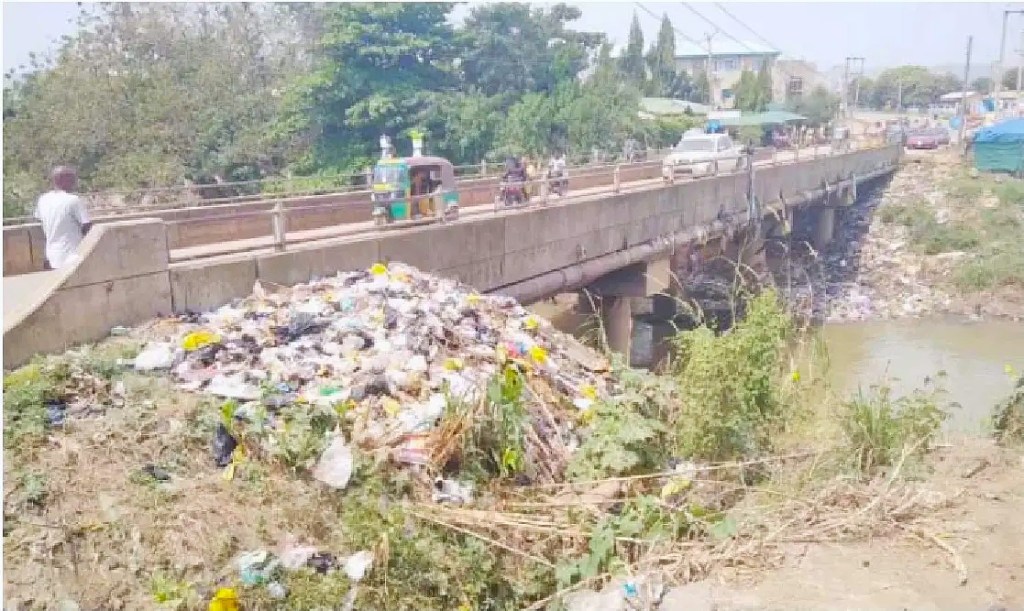
It is difficult for the average person to believe that any serious effort is being made by the AEPB to curtail these practices. Instead, it is far more common to see its agents harassing informal business owners. Which comes first, the chicken or the egg? Should the authorities begin by taking their responsibilities more seriously before engaging in acts of semi-vandalism, or should they expect the average citizen to lead the way by becoming “responsible”?
To use a common analogy, a guest more often than not tries to conform to the sanitary practices of his host’s home. If the house is always well-kept, he will find it much harder to drop trash wherever he pleases. But when the opposite is the case, even if he is a clean person in his own home, he will not necessarily feel compelled to respect his host’s space, because no example has been set.
The question, then, is this: where are the practical sanctions for communities that fail to adhere to the guidelines set by the AEPB in terms of public sanitation? What positive examples has the AEPB provided as proof of its effort to keep the town clean?
Such measures could include the imposition of fines on offenders or other sanctions designed to deter similar practices, followed by an active effort to clear the already accumulated waste in river valleys. Furthermore, the AEPB could make its waste bins and collection services more accessible and affordable to local communities, as well as make garbage processing plants more numerous.
Yes, a public board alone cannot shoulder these responsibilities, especially given Nigeria’s population explosion. However, countless opportunities exist for public–private partnerships in this sector. Significant revenue could be generated, thousands of jobs created, and a cleaner environment secured. But that, perhaps, is a topic for another time.
A ticking Bomb
Nigeria, beyond its inability to properly manage the waste it generates, also permits far more dangerous waste to be imported into the country. According to a report published by the Foundation for Investigative Journalism, about half a million metric tons of Used Electrical and Electronic Equipment (UEEE) arrive in Nigeria annually, mainly through the ports in Lagos. A significant portion of this equipment arrives already dead or no longer usable, adding yet another layer to the mountains of refuse in the country’s dumpsites, landfills, and informal scrapyards, where it is scavenged to recover valuable elements such as copper, iron, aluminium, nickel, silicon, platinum, cobalt, and gold from tangled heaps of toxic debris.
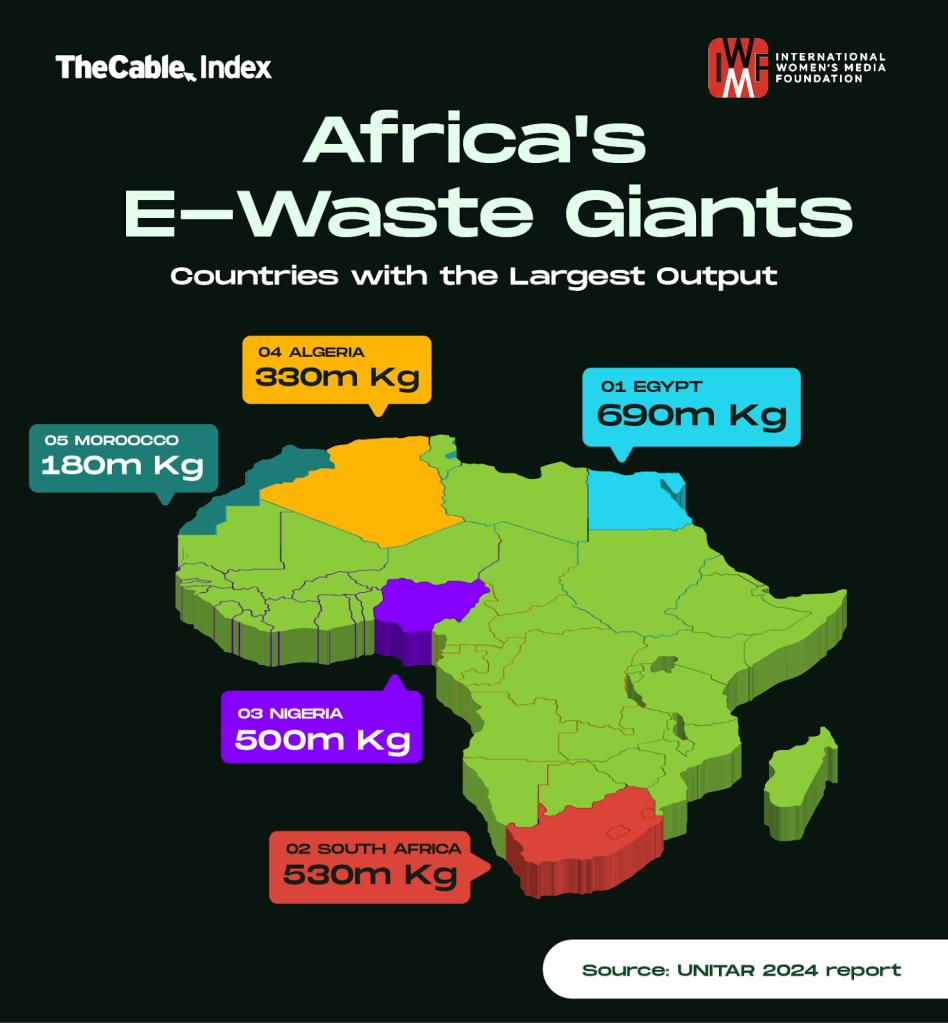
Ultimately, because of the crude and unprofessional nature of garbage processing, substances such as lead, cadmium, mercury, zinc, and lithium silently seep into the soil, poisoning the land and water of host communities. Studies have linked exposure to these pollutants to increased rates of birth defects, miscarriages, DNA damage, weakened immune systems, learning disabilities, and cancer. Meanwhile, the open burning of e-waste releases greenhouse gases, further aggravating Nigeria’s already fragile climate conditions.
A water-quality analysis conducted at a sample landfill revealed leachate containing dangerously high concentrations of cadmium, lead, iron, chloride, and ammonia—far beyond limits permitted by regulatory authorities—flowing directly into nearby water sources.
The irony is staggering. Nigeria has ratified the Basel Convention, which stipulates that only functional electronic equipment intended for reuse may be shipped across borders. Yet regulatory loopholes, corruption, and institutional negligence have turned this legal safeguard into a meaningless formality. According to TRT World, as many as 500,000 containers of e-waste enter Nigeria every month.
The National Environmental Standards and Regulations Enforcement Agency (NESREA) is tasked with ensuring compliance with environmentally sound practices in line with Nigeria’s circular-economy ambitions. But it is painfully evident that the agency is failing at this mandate.
Physicians in Nigeria who specialize in pulmonology warn that informal e-waste recyclers are slowly signing their own death warrants. Cancer, stroke, and severe eye disorders await many of them, driven by genetic mutations triggered by constant exposure to toxic particles. Even more disturbing, these changes may be passed on to their children, altering bloodlines and biological destinies through damaged genetic codes. What is more alarming is that experts insist that even some of the waste people casually dump in their homes can cause similar harm after repeated exposure.
Therefore, the urgency to confront Nigeria’s waste crisis is not merely about foul odors or the unsightly appearance of our cities. It is about survival. It is about protecting not only ourselves, but generations yet unborn. Unregulated waste is a slow, silent executioner.
Once you toss your garbage away, the responsibility does not end. Remember, that illegitimate child has a father – it is you.
Citizens must demand accountability, engage the state through community-based initiatives, and push for transparency in waste management systems. More importantly, Nigerians must begin to explore entrepreneurial solutions—public-private partnerships that transform waste from a national curse into an engine for employment, innovation, and environmental recovery. Anything less is collective suicide, politely disguised as negligence.

 Abdul's Analysis
Leave a comment