“In the context of Nigerian politics, ‘ideology’ means the doctrine of getting to power by all means and doing everything possible to retain it”
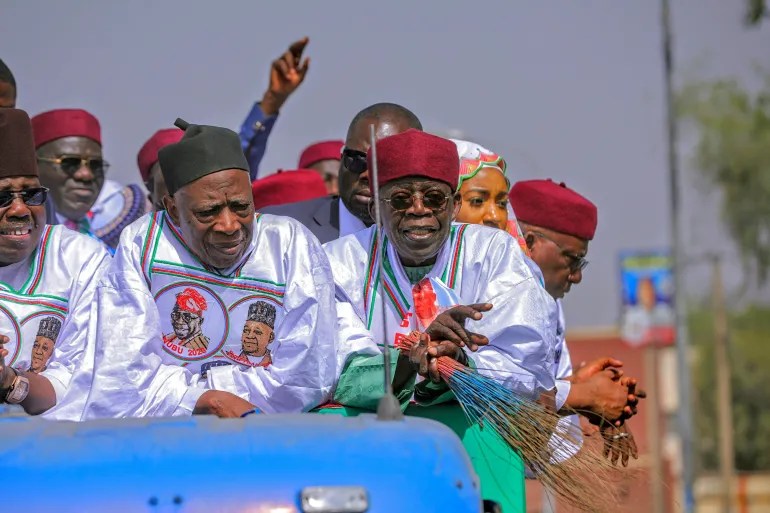
Like most cultures globally, Nigeria’s diverse ethnicities reserve a revered place for music. Hausa culture, for instance, has a rich history of conveying moral lessons and cultural values through music. Songs are used to mark the significance of events, be it a wedding or a commemoration of some sort. One must mention legends like Mamman Shata, Dan Kwairo, and their contemporaries when Hausa musical tradition is discussed. These traditional musicians used their art to teach moral lessons, entertain royal courts, and the wealthy elite. They would, of course, occasionally take jabs at one another during rivalries. The bottom line is that music, as art and entertainment, serves as a vital measure of cultural sophistication.
However, as with all professions, musicians also tend to capitalize on apparent opportunities, seizing the moment without hesitation in pursuit of gain. In today’s political climate in Nigeria, this opportunity presents itself in the form of politics devoid of a substantive agenda. Selling politicians to the majority uneducated sect of the masses through the concoction of feel-good songs became the order of the day. Whoever masters this trade reaps the reward and enjoys all the glory that follows thereafter.
The ground is fertile for musicians to go beyond being mere entertainers in Nigeria’s political space, for this simple reason: musicians have become the middlemen between the poor masses and the political elite. The electorate has largely become so disconnected and disenchanted with their political leaders that they can no longer fathom their arguments, for how does one justify supporting one political camp over the other when they always seem to merge into the same party (the ruling party) after elections? This confusion arises because there is no real ideological difference between the political parties.
In the context of Nigerian politics, “ideology” means the doctrine of getting to power by all means and doing everything possible to retain it; it means the policy of enriching oneself and one’s cronies; it is the theory that holds that the end justifies the means. In reality, there is no genuine ideology in the country’s politics.
The Opportunity Cost
This leads us back to the original premise that, in the absence of a true political agenda, praise singers fill the void with feel-good songs to move the electorate to vote for political parties and candidates. Naturally, this has turned musicians into power brokers and important figures in the political landscape, often sidelining the educated elite – technocrats, philosophers, and researchers. This is especially true in Northern Nigeria, where significant political patronage is directed toward leading praise singers. Politicians shower these singers with gifts in exchange for access to the uneducated grassroots populace.
In essence, it is a win-win deal for both parties. From a politician’s point of view, a praise singer does not ask critical questions; rather, he suppresses the very faculty that formulates the questions in the human mind. By amusing and numbing the electorate, he dampens the urgency to demand true change. The singers, on the other hand, make big money and gain recognition, while the electorate becomes the losing side, trading national development and good governance for cheap sensationalism.
Meanwhile, the music plays, but the country suffers. The victims of this “piano-governance” charade fall into three categories. First are the intellectuals, who are viewed as threats—too educated and ‘boring’ to be useful for political mobilization. Second are the entrepreneurs, who could create jobs but are starved of government support and loans.
Resources that could have benefited them through constituency projects or contracts are instead squandered on praise singers, creating mega-rich musicians while leaving prospective entrepreneurs starved of opportunity. Third, and the greatest casualty of all, is the ordinary citizen. They are robbed of a future and denied access to the basic necessities of life—good roads, quality healthcare, safety, and economic opportunity.
Distortion of Societal Value System
Flush with cash and inflated ego, these musicians battle for prestige. A major flashpoint occurred in 2018 when the Emir of Kano, Muhammad Sanusi II, named Naziru Ahmad the “Sarkin Waka” (King of Music), for songs frequently performed in the monarch’s honor. However, rival musician Dauda Kahutu (Rarara) viewed this as an affront. Unwilling to be outdone in wealth or elite recognition, he embarked on a quest to reclaim his status. His first attempt—an honorary doctorate from an obscure foreign university— turned out to be a scam when the real institution denied any involvement. Undeterred, he later secured the title “Sarkin Wakar Kasar Hausa” (Chief of Hausa Musicians) from the Daura Emirate Council in 2025.
These examples illustrate how even traditional institutions—previously revered as sacred symbols of culture and moral values—have become willing participants through the politicization of culture in the ecosystem of piano-governance. When a traditional ruler anoints a musician known for abusive language or blind loyalty to a corrupt politician as a ‘hero,’ it suggests that the throne is for sale. This alienates the educated elite who respect the institution for its historical sanctity. Historically, traditional titles were reserved for community builders, warriors, and scholars.
What lesson does a society that adopts piano-governance teach its young generation? This phenomenon validates the get-rich-quick syndrome. Should this nation then wonder why it faces a plague of kidnapping, cybercrime, and cultism, when the formula for wealth is so clearly written on the wall?
While a praise singer is showered with millions and brand new SUVs, a 17-year-old named Nafisa Abdullah Aminu from Yobe State was crowned the world’s best in English at the TeenEagle Global Finals in London, beating over 20,000 participants from 69 countries. Imagine if the Nigerian state set a worthy example by honoring this bright girl in a way that inspired every child to aspire to similar greatness. Perhaps another child might soon become the world’s best in electrical engineering, or another in medicine.
Unfortunately, Nigeria’s system of piano-governance only offered Nafisa a gift of 1 million naira through the office of the Senior Special Assistant to the President on Humanitarian Affairs and Poverty Reduction. Yes, one is forgiven for wondering if this is even a real office. Even if it is, surely no serious nation would choose such an obscure place to honor a world champion. So, was that 1 million naira a genuine reward, or merely a charitable handout?
She received neither a traditional title from a king nor a scholarship from the government or politicians afterwards, simply because she could not be used to mobilize voters. What will it take then to fundamentally change the incentives for mobilization by the state and politicians? And let us look inward: are the electorate not equally guilty of the complacency that allows this charade to thrive?


 Abdul's Analysis
Leave a reply to Khadija Halliru Atiku Cancel reply